

Section 301 Tariffs: What Drayage Carriers Can Expect for the Upcoming Shopping Seasons
The latest round, a fresh set of Section 301 tariffs that landed on July 24, replaced the temporary Section 122
The latest round, a fresh set of Section 301 tariffs that landed on July 24, replaced the temporary Section 122

West Coast vs. East Coast: The Impact of the New Tariffs on Different Ports On July 24th, the Section 122
What is Point-to-Point Pricing? Point-to-point pricing assigns a rate to a specific origin-destination pair, rather

In simple terms, zone-based pricing divides your service area into different geographic zones, and gives you a rate for each one depending on how far it is from the origin point. The farther the zone is from the origin, the greater the cost, and vice versa. Zones are determined by each individual carrier, and tend to be labeled numerically, increasing the farther away they get (e.g. Zone 1, Zone 2).
A simple example of flat rate zone pricing for a carrier working out of Houston might look like this:
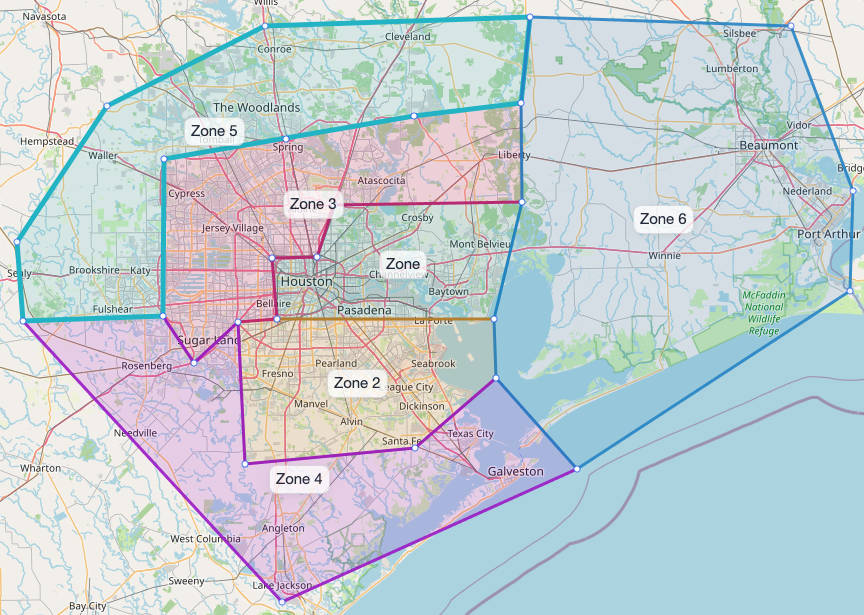
Every delivery ZIP or address that falls within Zone 2 gets the same Dray rate. Regardless of whether it's a distribution center in Pearland or a manufacturing plant in Dickinson. The rate is the same because the distance band is the same for the zone.
Unlike general Mileage Bands, where the same rate logic applies across the board, zone pricing offers the ability to drill down to specific locations or areas. It takes into account traffic, tolls, construction, or special customer Dray rates to ensure a profitable outcome. A single rate or Mileage Bands within a zone can be used depending on the best operational approach.
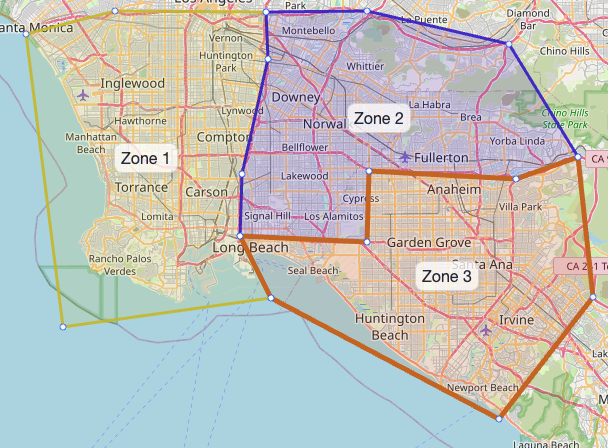
Less traffic and more container turns going North, price aggressively, more traffic less container turns going South, price accordingly.
With Dray Insight you can manage your team's full rate profile in one central dashboard, whether it's zone or point-to-point pricing. Get started today or book a demo with our team.
Subscribe to the free newsletter and get market intel delivered straight to your inbox.